Artificial Intelligence vs. Human Intelligence
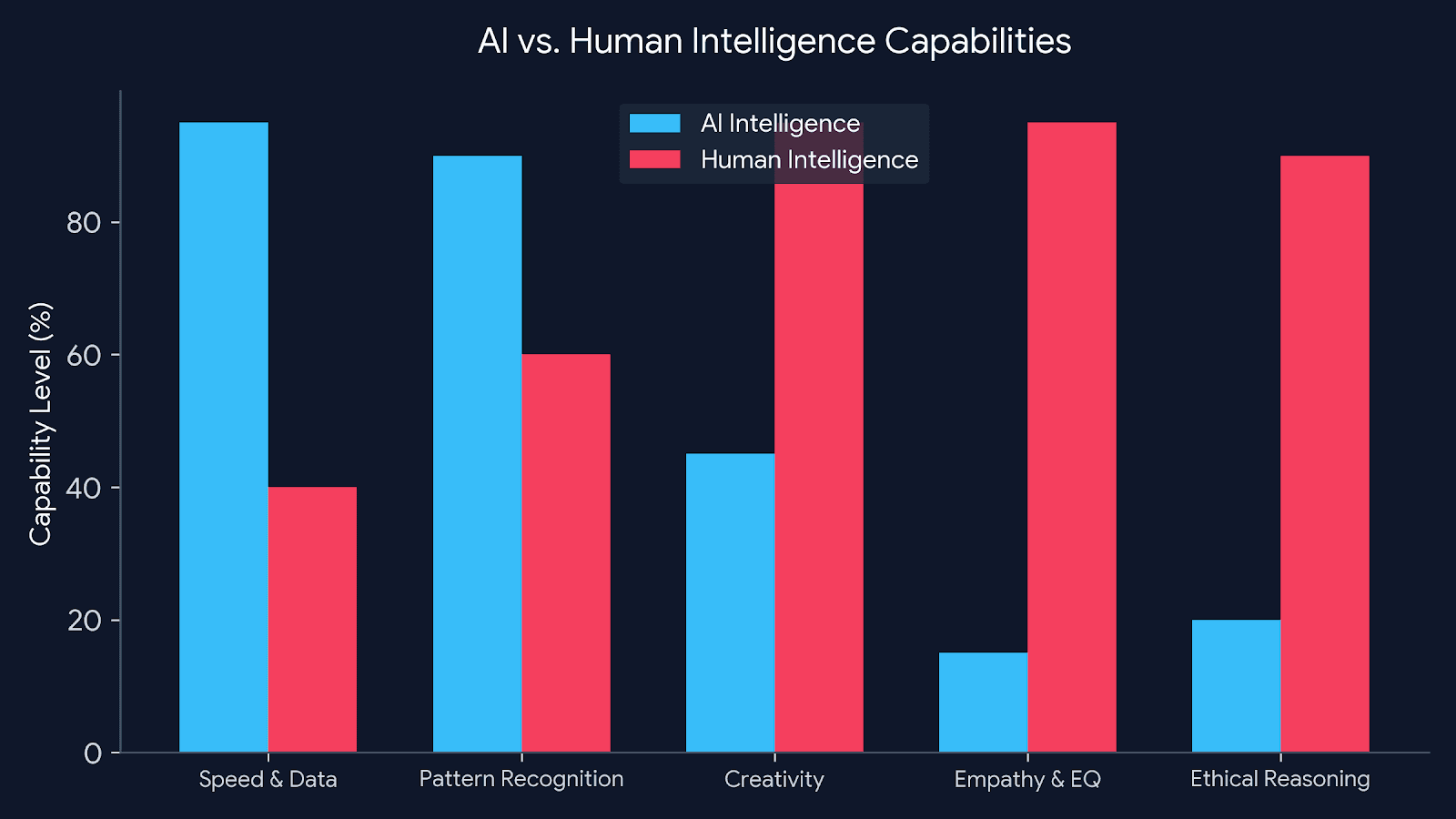
Understanding the Future: Artificial Intelligence vs. Human Intelligence In recent years, Artificial Intelligence (AI) has rapidly transformed from a futuristic concept into an everyday reality. From self-driving cars to advanced data analysis, machine intelligence is reshaping how we live and work. However, as AI continues to evolve, an important question arises: can it ever truly replace Human Intelligence? The Essence of Human Intelligence Human intelligence is defined by adaptability, emotional capacity, and creative reasoning. Unlike machines, humans process information through the lens of experiences, emotions, and ethical values. Creativity and Originality: Humans can invent concepts out of nothing, driven by curiosity and imagination. Emotional Intelligence (EQ): We understand empathy, subtle body language, and context, allowing us to build deep interpersonal connections. Critical Thinking: Humans can navigate complex ethical dilemmas and make decisions even when data is incomplete or ambiguous. The Power of Artificial Intelligence Artificial Intelligence excels in speed, accuracy, and pattern recognition. It thrives on processing massive volumes of data far beyond human capacity. Speed and Efficiency: Algorithms can analyze millions of data points in seconds to predict trends or diagnose diseases. Consistency: Machines do not suffer from fatigue, emotional burnout, or subjective bias in repetitive tasks. Automation: AI handles complex, repetitive workflows smoothly, allowing industries to scale rapidly. Cooperation, Not Competition Rather than viewing AI as a competitor, the most promising path forward is collaboration. AI acts as a powerful multiplier for human potential. While a machine can process complex diagnostic images, a human doctor brings empathy, ethical judgment, and personalized care to the patient. Conclusion AI is an extraordinary tool created by human ingenuity. While machines may surpass us in computational speed and data analysis, human intelligence remains unique in its capacity for empathy, creativity, and moral judgment. The future belongs not to machines alone, but to humans who effectively leverage artificial intelligence to solve global challenges.